
Leadership and Innovation
Degrees

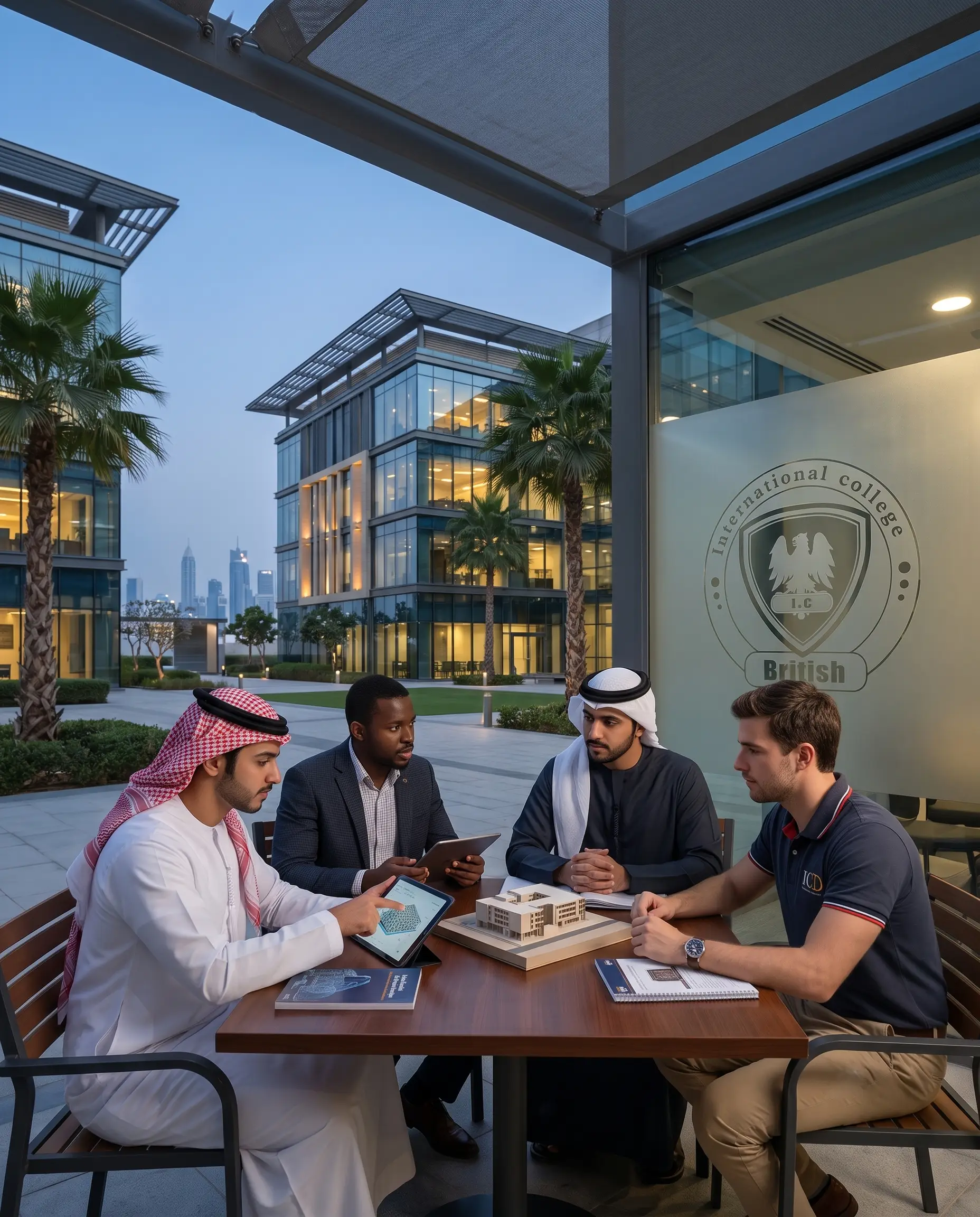
Navigating International campus life GCC requires a structural balance between elite academic demands and deep regional integration. Modern educational institutions successfully merge local heritage with the operational standards of Cultural diversity colleges UAE, fundamentally optimizing the expat student experience MENA. This right-to-left cultural integration ensures both local and international students build the cross-cultural cognitive frameworks necessary for regional leadership and sustained enterprise authority.
The 2026 academic landscape across the Gulf Cooperation Council (GCC) operates on a highly advanced integration model. Top-tier educational institutions have moved past the outdated "expat bubble" paradigm, engineering campus environments where rigorous global curricula intersect directly with deep local heritage. For ambitious students and corporate recruiters, the value of a degree is now heavily weighted by the graduate's ability to navigate complex, multi-cultural enterprise environments natively.
Establishing a dominant International campus life GCC framework means structuring daily academic and social operations to naturally facilitate cross-cultural synthesis. It requires an intentional architecture that respects regional nuances while maintaining the intense intellectual velocity expected by global accreditation bodies.
Achieving true cultural and academic balance is not a passive outcome; it is a meticulously engineered environment. Modern GCC campuses utilize strict right-to-left cultural integration, ensuring that local traditions, language nuances, and business protocols are structurally embedded into the daily student experience. This methodology prevents the isolation of international students and builds unshakeable regional authority for the institution.
By aligning global academic rigor with local socio-economic realities, universities produce graduates who are not just technically proficient, but culturally fluent operators ready for deployment in Riyadh, Abu Dhabi, or Doha.
Cultural Contextualization: Adapting global case studies to reflect GCC-specific macroeconomic challenges, ensuring academic rigor directly applies to regional realities.
Structured Mentorship: Pairing international cohorts with local academic mentors to accelerate cultural onboarding and decode regional business etiquette.
Unified Digital Portals: Deploying bilingual campus management systems (Arabic/English) that support seamless bi-directional communication and scheduling.
Answer: They deploy integrated cohort models rather than segregated housing or localized academic tracks. The modern expat student experience MENA is optimized by forcing multi-national collaboration on high-stakes academic projects. This structural necessity drives organic cultural exchange. When students are evaluated on their collective ability to solve complex engineering or economic problems, cultural barriers dissolve into operational synergies.
|
Campus Metric |
Traditional Expat Bubble Model |
Integrated GCC Campus 2026 |
|
Social Architecture |
High segregation; international and local students operate in parallel silos. |
High synthesis; mandatory cross-cultural academic and social task forces. |
|
Cultural Literacy |
Superficial understanding of GCC customs and business protocols. |
Deep, operational fluency in right-to-left cultural integration. |
|
Academic Focus |
Generic global curriculum with zero regional application. |
Hyper-localized application of global standards to MENA enterprise challenges. |
|
Post-Graduate ROI |
High friction when entering the local GCC job market. |
Immediate deployment readiness for regional corporate leadership roles. |
The UAE and broader GCC markets demand executives who possess high-level contextual intelligence. By structuring Cultural diversity colleges UAE as micro-economies of the real world, institutions act as the ultimate training ground for 2030 leadership. The diversity is not a marketing metric; it is a pedagogical tool.
When a campus correctly balances academic pressure with a rich tapestry of global perspectives, it builds Topical Authority in the minds of future employers. Graduates from these environments do not suffer from culture shock; they leverage their diverse campus networks to secure high-ticket B2B partnerships and drive regional innovation.
The future of enterprise leadership in the MENA region requires absolute cultural and academic fluency. Do not settle for a fragmented educational experience. Position yourself at the nexus of global rigor and regional authority.
[Apply Now for the 2026 Intake — Join our Integrated Campus and Build Your Ultimate Executive Network]
It is considered one of the largest universities, as it has more than 65 accredited training programs. The student in the program obtains internationally accredited certificates and is certified by the study embassy What distinguishes our university from other universities in Britain is the large number of accreditations it enjoys, which makes it at the forefront of international universities that organize professional programs. It is a member of the UK Register of Centers for Education Providers (UKRLP) Search with registration number 10065749. It is also a member of the list of accredited non-governmental organizations of the Economic and Social Council of the United Nations, and also a registered member of the European Union's Transparency Register under the number TR-Q-2017-22003.

internationalcollege-online

